
The question, in the buyer's words
I run a 70-person blue crab picking and packing plant on Maryland's Eastern Shore, and peak season leaves us short of hands; could autonomous mobile robots move full totes from the picking tables to the cooler without blocking the crew?
Key takeaways
- Robots can carry full totes to the cooler, but they cannot pick crab or replace the picking crew.
- Blocking is a layout and timing question, so measure peak-week crossings before choosing a route.
- Local unemployment is set county by county, so check your own county before planning headcount.
- Start with one leased unit on one route and judge it on tote waits and table idle time.
- The lease quote follows a free site assessment, because the route and cooler door decide the scope.
Can mobile robots move full totes from picking tables to the cooler on the Eastern Shore?
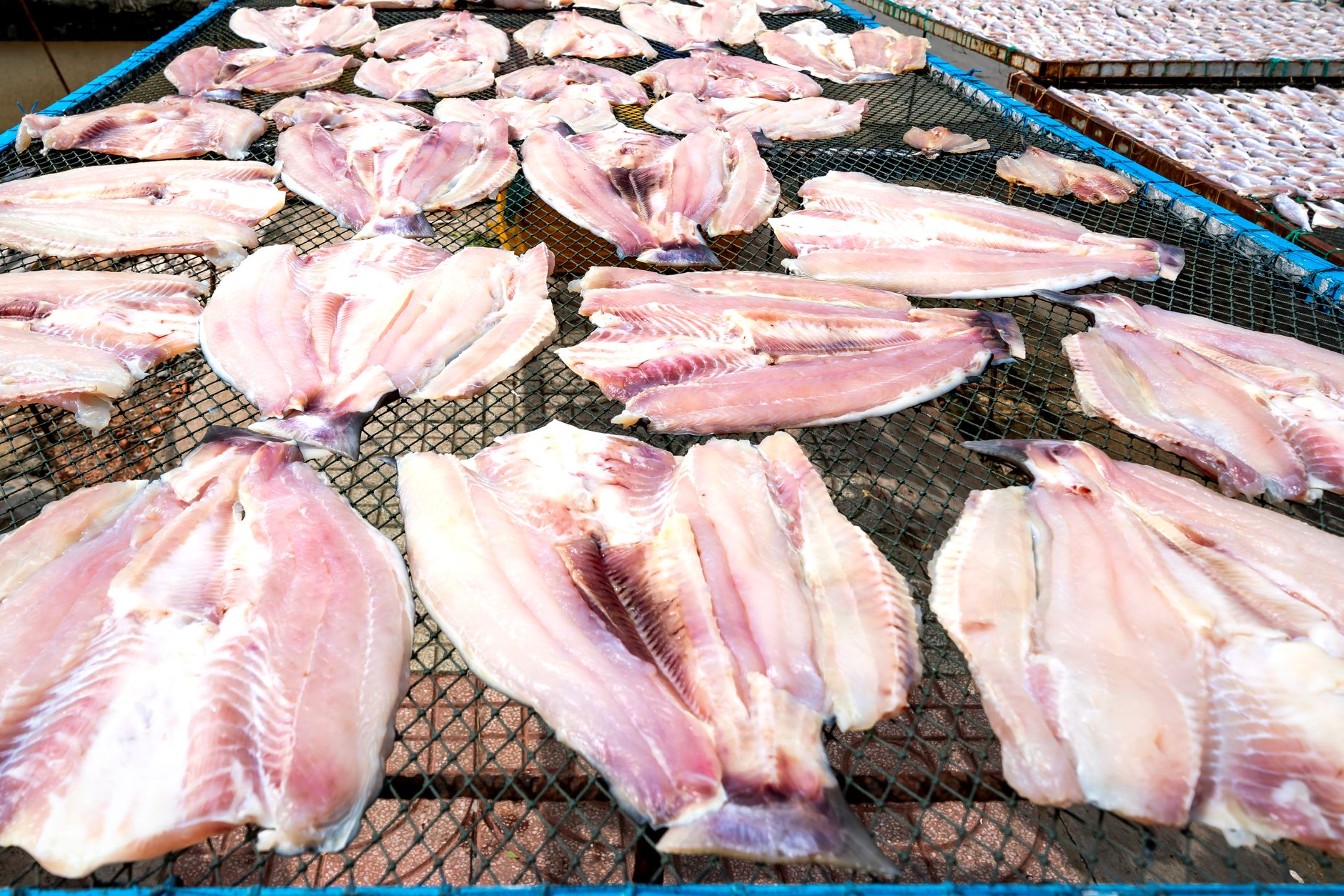
Picking houses on Maryland's Eastern Shore run on a simple flow. Crab is picked at long tables, meat is packed into containers, and full totes need to reach the cooler before the next batch fills the table. When the crew is short, someone stops picking to carry totes, and the seats left empty are the real cost of the gap. An autonomous mobile robot takes that carrying job, moving a full tote on a set route from a pickup point to a cooler dock and bringing back the empty tote.
The scale of the state's crab work shows why peak weeks hurt. The Maryland Department of Natural Resources estimates about 23.94 million pounds of blue crab were harvested in 2025, according to its commercial landings table, down from 24.86 million pounds listed for 2024. The table was last updated March 18, 2026, and its figures can be revised, so treat them as estimates and check the newest version before you build a plan around them.
Partly is the honest answer. The robot fits the repeated, fixed-route haul, and it does not fit crab picking, handling live product or replacing the people who keep tables full. The useful first step is finding out which part of your peak week the robot can take off the crew, and which part it cannot.
How short is the crab picking workforce on the Eastern Shore?
The labor side is where the pressure comes from. According to WJLA, Maryland crab houses lost about 40 percent of their workers after the H-2B visa program moved to a lottery, and about 200 of roughly 500 typical visa applications were denied across 20 licensed processors. That article is undated in the search results, so read the figures as a reported snapshot rather than a count for this season.
A My9NJ report puts the seasonal need at about 450 workers to process blue crab at 23 crab picking houses. Bay Journal reported in 2022 that nine of ten crab picking houses on Hoopers Island had no H-2B workers under the lottery. Read together, these reports describe a shortage that has lasted across several years of reporting, not a single bad season.
Maryland Matters reports that processors say local workers rarely take crab picking jobs. That means a plant cannot assume more people living nearby will solve a peak week. The 2026 H-2B lottery results for Maryland crab houses were not found in this research pass, so ask your trade association or visa agent for this season's count before you set headcount.
What does the Eastern Shore labor market look like in 2026?
Local unemployment varies county by county. USAFacts reports that Wicomico County ranked 9th of 24 Maryland counties on unemployment in May 2026, and county rates across the state ran from 2.8 to 5.4 percent that month. Those are monthly county estimates, not annual averages, so they move from one release to the next. Check your own county's latest figure before you plan headcount.
Labor force size matters as well. A Maryland Commerce profile puts Wicomico County's civilian labor force at 52,107 in 2023. That is a sizable pool, but seasonal picking work competes with other employers for the same people, and a plant that needs dozens of extra hands in peak weeks should not assume the county pool will supply them.
For official annual figures, use the Bureau of Labor Statistics Local Area Unemployment Statistics. Climate facts for the Eastern Shore were not verified in this research pass, so if humidity or temperature shapes your cooler or floor plan, take those readings from your own plant records and from the site survey.
What can a mobile robot do on the picking floor, and what can it not do?
On this job a mobile robot does four things. It waits at a pickup point, takes a full tote, carries it along a mapped route to the cooler, and returns to collect the empty tote. It does not pick meat, grade product or decide what goes into a tote. Those jobs stay with your crew, where a skilled picker's hands and judgment are worth the most.
Warehouse adoption gives context, though not a seafood benchmark. Peerless Research Group's 2025 survey of 139 respondents found 41 percent using shuttle or mobile robotic storage systems, and 59 percent planning upgrades within two years. Those are warehouse operators, not crab houses, so use them only to judge how common this equipment has become.
The robot also does not handle a bad day on its own. If a route is blocked, a door is closed or a tote is tipped, the unit stops and waits, and someone on the crew has to clear it. Build that into the shift plan instead of hoping it never happens. Ask the integrator which parts of the route run through washdown areas or cold rooms, and what the unit is rated to handle, because a warehouse unit is not automatically a fit for a seafood floor.
- Hauling full totes
Autonomous Mobile Robot
Carries one full tote per trip along a mapped route, the same way every trip
Staff
Carries totes when a hand is free, but every trip is a seat not picking
- Route consistency
Autonomous Mobile Robot
Repeats the same path at the same speed, shift after shift
Staff
Varies the path and can adjust around spills or a wet floor
- Handling exceptions
Autonomous Mobile Robot
Stops and waits when a route is blocked, then needs a person to clear it
Staff
Adapts, clears the blockage and keeps moving
- Judgment on product
Autonomous Mobile Robot
None, it does not grade, pick or inspect product
Staff
Grades, picks and spots problem product
- Staffing dependence
Autonomous Mobile Robot
Does not depend on seasonal hiring once it is running
Staff
Depends on seasonal hiring, which the H-2B lottery has disrupted
- Hours and breaks
Autonomous Mobile Robot
Runs whatever shifts the plant sets, without breaks
Staff
Needs breaks, and those breaks have to be scheduled
Will a robot block my crew at the picking tables?

Blocking is the main worry, and it is mostly a layout question. A unit needs a clear lane, a pickup point that does not sit inside the reach of a table, and a drop point at the cooler that does not stack traffic with people pushing carts. If the tables run right up to the aisle, the robot will be near hands and loose product all shift.
Sensors let the robot stop for people, but stopping is not the same as working. A unit that pauses every time someone crosses its path during a rush can slow the line more than the walking it saves. A site assessment should measure real crossings at peak, not an empty floor on a quiet morning.
Timing matters too. Crew breaks, tote changes and washdown windows are when the aisle is busiest, so schedule runs around them. Set a simple rule that full totes wait at the end of the table for pickup, not in the lane. The most recent injury rate for seafood processing was not verified in this research pass, so bring your own incident log to the site assessment and ask how a new traffic pattern will be tracked.
How should the route and staging be set up for a crab plant?
Start with the map. A site assessment usually begins with a floor plan and a walk at peak, marking where totes are staged, where the cooler door is, and where people cross the route. Mapping gives the unit a path it can repeat, and it shows where a one-way lane or a staging rail would keep the crew clear.
Keep the first deployment small. One pickup station on one route is easier to test and measure than the whole floor. Once the route runs cleanly through a peak week, add stations one at a time. This is a phased deployment, and most plants start with one leased unit rather than a fleet.
Then settle the empty tote loop. If empty totes are returned to the table end on a fixed schedule, the unit does not sit waiting at a station, which is an easy place for idle time to build up. Set a count of spare totes per station and check it at the start of each shift.
What moves the cost of a lease quote up or down?
A lease quote depends on the site, not on a standard figure. Route length, the number of pickup and drop points, floor and door conditions, and how many units you need for peak all shape what gets quoted. The drivers below show which ones tend to matter most, so you can ask better questions before the assessment.
Some smaller factors still count. Cooler door height, dock transitions and washdown rules affect the hardware and integration work. Crew training time and the service plan you choose also shape the total arrangement, and so does whether you start with a single unit for a trial season.
How does getting a robot through a lease work with a seafood plant?
We are a vendor-neutral integrator. We pick the right robot for the site, lease it through financing, deploy and integrate it, train staff, and service it under our service plan, backed by regional service engineers in every state we service. One partner handles the whole arrangement, instead of several vendors who each own a piece of it.
The payment comes in a quote after a free site assessment. No quote is given until the plant has been walked and the route measured at peak. Ask that the quote spell out maintenance, on-site dispatch, go-live support and what happens when a unit is down during a busy week, including whether a spare unit can cover the route.
What should a plant check before running a pilot?
A pilot should answer one question: does the route keep the crew at the tables during peak? Choose a peak period, agree on the measures in advance, and review them with the crew before deciding anything about a larger deployment. If the pilot does not change tote waits or table idle time, the robot is not the right fit for that route.
- Measure crossings and tote waits during a real peak shift, not an empty floor.
- Confirm the cooler door, dock height and any washdown areas on the route.
- Count totes and staging spots at the busiest table before choosing pickup points.
- Name the person who clears a stopped unit on each shift.
- Agree on what you will measure at the end of the pilot, such as tote waits and table idle time.
Frequently asked questions
Want a warehouse robot at your seafood processing plants?
Tell us about your site. We will recommend the robot, quote the lease, and keep it serviced.