
The question, in the buyer's words
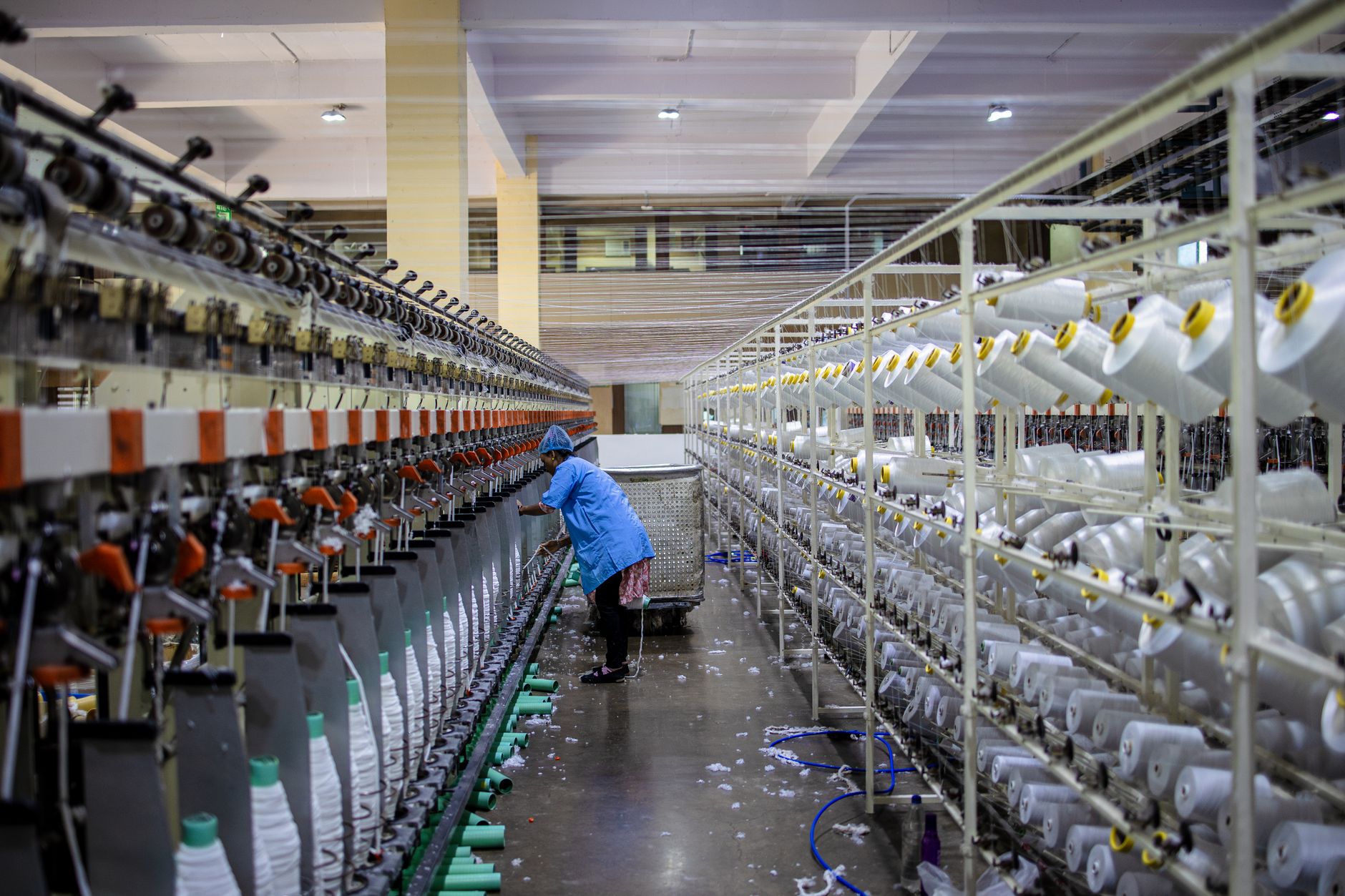
I run a 110-person carpet tile plant where rolls get hand-carried between dye tanks and cutting tables and the carry crew is always behind; could autonomous mobile robots move rolls between those stations without blocking aisles?
Key takeaways
- Mobile robots suit repeated roll runs between fixed stations, not one-off lifts.
- Mapped routes and a dedicated lane protect aisles more than robot speed does.
- A crane or hoist step at the dye tank is a reason to stop before any quote.
- Where personnel detection is muted, such as during docking, ISO 3691-4 caps speed at 0.3 meters per second.
- Start with one leased unit on one route, then add units once that route runs clean.
Can mobile robots carry carpet tile plant rolls between dye tanks and cutting tables?
For a carpet tile plant, the practical answer is that autonomous mobile robots can carry rolls along fixed, repeated routes between dye tanks and cutting tables. The robot does best when the pattern is predictable: the same handoff points, loads arriving at a steady rhythm, and a path that a person could walk without weaving through other traffic. It is not a general tool for every lift in the building, and it should not be treated as one.
Your carry crew is falling behind because hand carry does not scale with peak runs. When a dyed roll waits at the cutting table, that table sits idle while the crew is still walking to the next pickup. A robot does not tire late in the shift, but it cannot free a roll caught on a fixture or handle a load that needs a hoist. The useful question is which of your roll moves are repetitive enough to automate and which are exceptions that stay with people.
Why do carry crews fall behind in a carpet tile plant?
Carpet and rug manufacturing is a concentrated industry. First Research counts about 250 establishments in the US carpet and rug manufacturing industry. DataUSA reports a 2024 workforce of 41,607 in carpet and rug mills, with Georgia, Alabama and Tennessee the largest states. The two sources use separate measures, so read them as two views of one sector, not as figures to add together.
Carpet tile is a large part of the commercial market. Floor Focus, in its August and September 2025 issue, describes carpet tile as the commercial sector's largest segment. GMI Insights, citing a Carpet and Rug Institute point, reports recycled-material carpets at about 25 percent of overall production in 2023. Whether that touches your roll flow depends on your material mix, so check it during your site assessment.
Falling behind is usually a flow problem more than a headcount problem. Rolls leave the dye side in bursts, the cutting table pulls them at its own pace, and the crew absorbs the gap by walking farther and waiting longer. Before any robot enters the picture, time each handoff and count runs per shift at every station. Those two numbers will show whether the route has enough repeat work to justify a robot.
What kind of robot fits roll moves between fixed stations?
The class that fits this job is the autonomous mobile robot, which navigates a mapped floor without a fixed track or wire. Free-navigating units differ from guided carts that follow tape or wire, and they suit routes where traffic changes from hour to hour. ISO 3691-4 covers driverless trucks regardless of how they navigate, including free-navigating AMRs that tow, carry or lift loads, so the safety rules apply to a roll carrier as well as to a forklift.
Adoption is growing, though unevenly. A 2024 intralogistics study by Modern Materials Handling and Supply Chain Management Review found 46 percent of respondents use one or more types of robots, and 33 percent plan to adopt within three years. The study covers warehouses, distribution centers and manufacturing, so treat it as a broad signal rather than a carpet plant benchmark.
For roll work, the questions are physical. Confirm the cart or cradle the robot will hold, the roll weight, the lift height at each station and the docking accuracy each handoff needs. Also confirm where units charge and how long one full loop takes on your floor. A map of the actual floor, walked and measured by someone on your team, is the basis for every number a vendor gives you.
Will the robot block aisles or put people at risk?
Aisle blocking is a route design problem before it is a robot problem. The controls are a dedicated lane, marked staging zones at each station and a fixed crossing where people and robots share floor. Good route design keeps the main aisle open for foot traffic and forklifts, and it gives the robot a predictable place to wait when a table is busy.
The safety standard is specific. ISO 3691-4, in its 2023 edition, requires a personnel detection system where people may be present. When detection is muted or not fully effective, such as during docking, speed must not exceed 0.3 meters per second. A third edition draft is in member consultation, so ask which edition a robot design was built to.
The injury record explains why the carry task deserves attention. According to the Bureau of Labor Statistics, textile mills (NAICS 313) recorded a 2024 total recordable case rate of 2.5 per 100 full-time workers, with a days-away-from-work case rate of 0.6. South Carolina's 2024 injury table lists textile mills at 2.1 and all manufacturing at 1.9, though those are state figures, not national ones.
Older BLS data for manufacturing, from 2005, found overexertion was the leading event behind days-away cases, at 23 percent. Of those overexertion cases, 51 percent came from lifting and 22 percent from pushing or pulling. A 2025 report aimed at the textile industry, using 2023 data, says manual material handling drives musculoskeletal disorders as the greatest loss driver. The 2005 figures are dated, so use them as direction, not as your plant's baseline.
Robots reduce the lifting, but they do not remove the need for good staging. A cradle set too high, a dye tank handoff that needs a two-person lift, or a robot that waits in a walkway can move the risk rather than cut it. Check handoff heights and waiting spots as carefully as the route itself.
When is a mobile robot the wrong answer for roll moves?
A robot that cannot do the job wastes a lease and damages trust in automation on the floor, so the honest answer includes the no. Four situations point away from a mobile robot, and each can be checked during a site assessment before anything is quoted.
A conveyor can also be the better choice for a path that never changes. Mobile robots earn their place through flexibility, since the route can be changed in software and new stations added without rebuilding the floor. If your layout is locked for years and the flow is steady, a fixed system may be the right long-term answer, and the assessment should say so.
Wet or dripping rolls and hot surfaces at the dye tank also need checking. If the cradle or the robot's load handling cannot tolerate the condition, that is a finding to report, not a reason to force the fit.
- A crane or hoist must load rolls into the dye tank, and no fixed handoff can be built for the robot.
- Rolls are too heavy, too long or too irregular for any cart or cradle the robot can carry.
- Roll moves are so irregular that dispatching the robot takes longer than carrying by hand.
- The path is constant, high volume and fixed in place, where a conveyor or overhead system may move rolls with less floor traffic.
What does a shift look like once robots run the roll route?
A typical shift with a robot on this route keeps people on the work that needs them. The robot runs scheduled and requested moves, the crew stages and loads, and a supervisor reviews the route log for jams, waits and missed handoffs. The timeline below is an example, with the shift start and end set by your own schedule.
The first weeks differ from steady state. Routes need tuning, staging spots move, and the crew learns which handoffs run late. Plan for those weeks in the schedule rather than expecting full speed on day one. Ask for the route log in a format your supervisors can read in five minutes, because a log only the integrator can interpret slows the fixes that matter most in week one.
How would we lease, deploy and service a robot for a carpet plant?
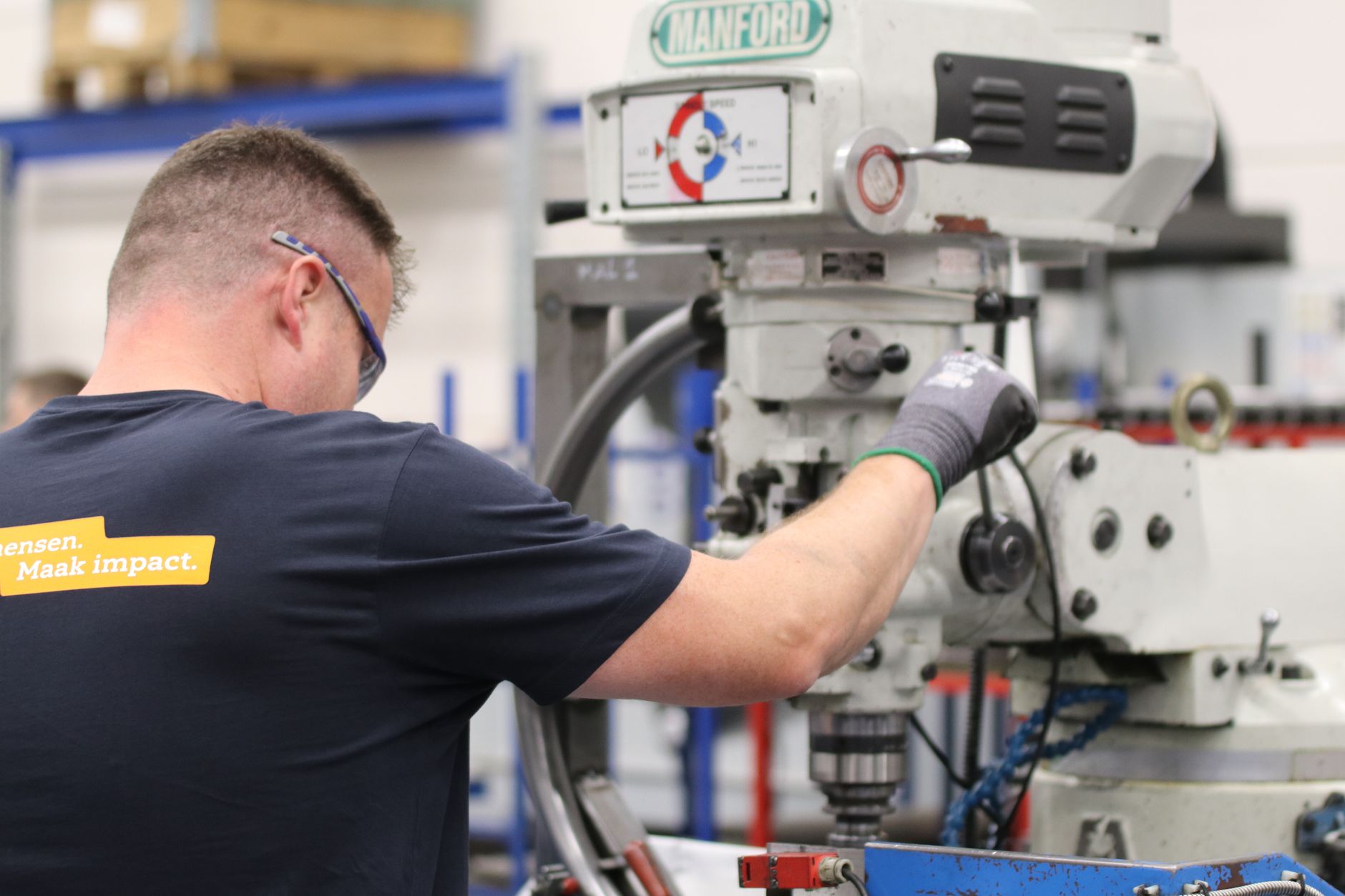
We are an integrator, not a single robot maker. We pick the robot that fits your floor across manufacturers, lease it through financing, deploy and integrate it, train your staff and service it under our service plan across every state we service, with regional service engineers in each one. One partner handles the whole lifecycle instead of several vendors. The lease is quoted after a free site assessment, where we measure roll weights, aisle widths, dye tank handoffs and the floor.
For a first project, start with one leased unit on the route with the most repeat runs. Phased deployment lets the crew learn the handoffs before a second unit joins, and go-live support covers the early weeks when routes get tuned. Spare unit coverage and on-site dispatch matter on a busy route, because one unit down can stall a cutting table. Ask how remote triage and emergency response work before you sign.
A pilot gives you your own numbers. Track how long each roll waits at the cutting table before and after go-live, the number of runs your crew still handles by hand, and the injury log for the handoff points. Those figures will carry more weight with your leadership than any general claim, including ours.
Does a robot change staffing pressure on the carry crew?
Staffing is why the crew falls behind, so it is fair to ask what robots do to that pressure. According to the Bureau of Labor Statistics JOLTS release, the 2025 annual total separations rate was 3.3 percent for all industries, unchanged from 2024. A FRED series for manufacturing total separations showed 2.30 percent for February 2026, against 2.50 percent a year earlier, though that series should be checked directly before you rely on it.
Robots do not fix turnover by themselves. What they change is the job mix. Repetitive carry runs move to the robot, and the crew keeps the work that needs judgment, such as loading, staging, quality checks and recovery when a roll goes wrong. That mix can be easier to staff and train for, but only if people are trained for the new tasks.
The adoption picture is worth a look too. The 2024 Modern Materials Handling study found 33 percent of respondents plan to adopt robots within three years, so many operations teams are weighing the same question. Plan staffing changes with your crew rather than around them, and expect the first questions to be about which tasks move first.
Frequently asked questions
Upcoming manufacturing events
- Trade showBrats & RobotsNov 10, 2026Alliant Energy Center Exhibition Hall, Madison, WI
- Trade showMATE Farm & Ranch ShowFeb 11 to 13, 2027MetraPark, Billings, MT
- ExpoPFMA Expo 2027Feb 17 to 18, 2027Washington County Fair Park, West Bend, WI
- ExpoLouisville Facilities Maintenance ExpoApr 15, 2027Mellwood Art Center, Louisville, KY
Want a warehouse robot at your carpet tile plants?
Tell us about your site. We will recommend the robot, quote the lease, and keep it serviced.