
The question, in the buyer's words
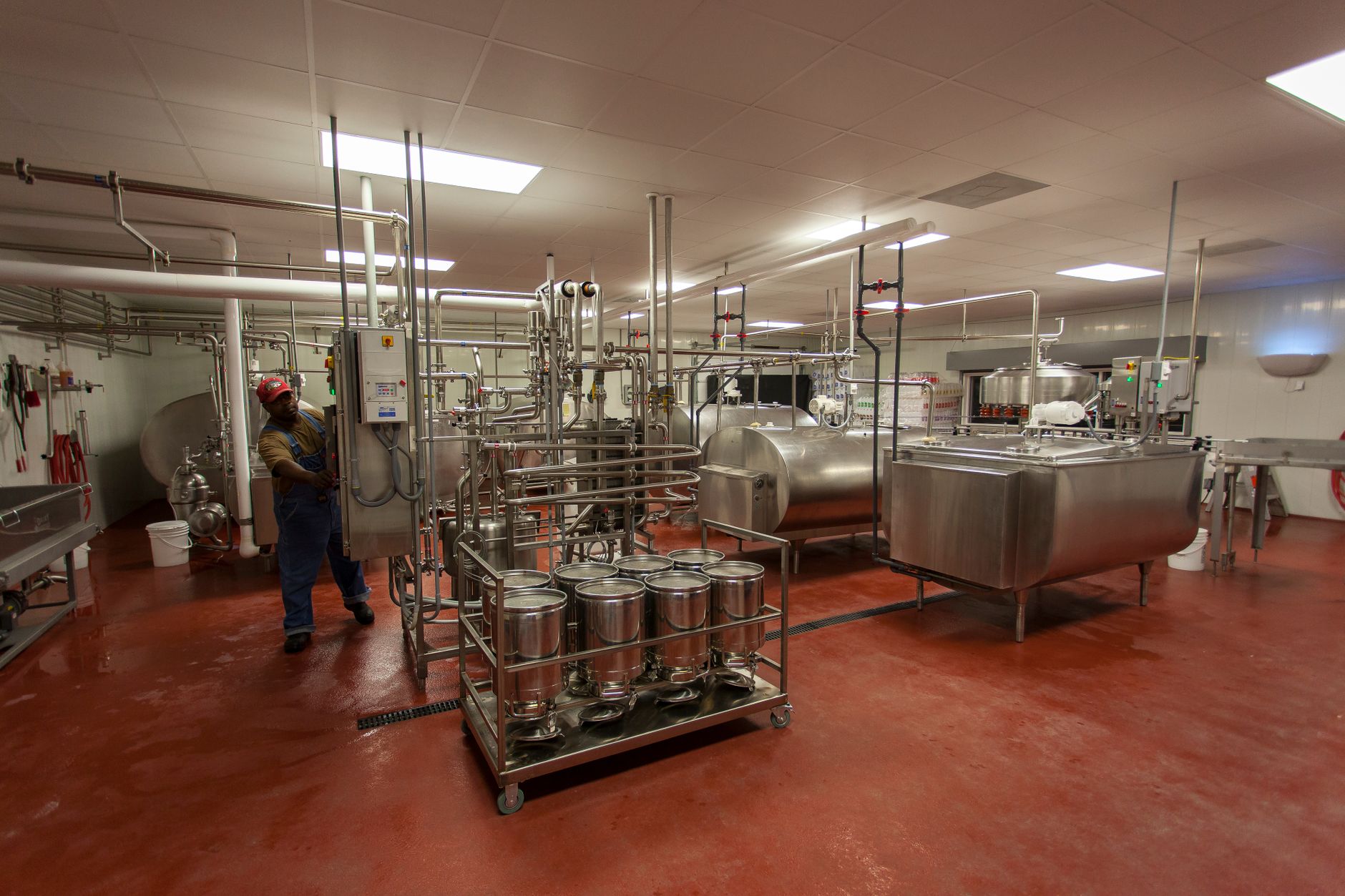
Our 40-person cheese plant in Madison, Wisconsin hand-wraps each block at a bench, and wrappers' wrists are giving out by midweek while holiday orders climb; could a cobot take the wrap while operators load and check?
Key takeaways
- A cobot can take the repetitive wrap motion while operators keep loading, checking and clearing faults.
- Wrist injuries carry long absences: one secondary analysis of BLS data puts the carpal tunnel median at 28 days against 8 days for all injuries.
- Madison's metro unemployment was 2.5 to 2.9 percent in 2026, so filling a wrap crew quickly is hard.
- A wrap cell is sized by block throughput and format count, not by headcount.
- Start with a free site assessment and a pilot finished before the holiday peak, not during it.
Can a cobot take the wrap step at a Madison cheese block bench?
Yes for the wrap motion, no for the whole bench. A cobot is a collaborative robot arm that can take the repeated wrap motion on a cheese block line, which is the part of the shift where wrist strain builds up. Your operators still load the blocks, check seals and labels, clear faults, and change over film and block sizes, so the realistic plan is a cell where a robot does the wrap and your crew does the rest.
That split is the core of the answer for a 40 person plant. You are not trying to remove people from the bench. You are trying to move the most repetitive wrist work off the people absorbing it midweek, and keep the judgment steps with trained staff. The sections below cover the Wisconsin output picture, what the robot takes over, where it does not fit, and how a lease would work.
How big is cheese block output in Wisconsin right now?
Wisconsin is the largest cheese producing state in the country, and the output figures show a busy, growing sector. According to USDA NASS, as carried in a Wisconsin Agricultural Statistics release, 116 cheese plants made at least one specialty cheese type in 2024. Cheese Reporter, citing USDA NASS, says Wisconsin's 2025 specialty cheese output was a record 1.03 billion pounds, up 1.1 percent.
USDA NASS also reports that Wisconsin led U.S. cheese production in 2025 with 24.6 percent of output, excluding cottage cheese. The national total was 14.8 billion pounds, up 4.0 percent from 2024. A plant in this state competes for holiday shelf space in a market where output keeps climbing, so a bench that slows during the holiday weeks puts the whole order book at risk.
Why do wrists give out by midweek on a wrap bench?
Wrapping is repetitive gripping and turning work, done at the same bench every shift, and wrist and hand disorders like carpal tunnel are where that repetition shows up in injury records. A secondary analysis citing BLS Table R67 counts 5,210 carpal tunnel cases with days away from work across 2023 and 2024 combined. It reports a median absence of 28 days for carpal tunnel, against 8 days for all injury types, and says 47.8 percent of these cases ran past 31 days.
Manufacturing carries a large share of that burden. The same analysis puts about 2,020 of the 5,210 cases in manufacturing, or 38.8 percent. These figures come through a blog rather than a BLS release, so pull the official table before using them in a board memo. The planning point holds either way: a carpal tunnel absence runs long, and a bench that loses one wrapper midweek loses more than a single shift.
Watch for the early signs on your own floor. Midweek slowdowns, wrist braces, and rising overtime to cover the same bench show that repetition is outpacing the crew. A wrap cell moves the most repetitive motion off the wrists, but it only works when the rest of the bench is designed around the people who stay.
Can Madison staffing fill wrap bench shifts fast enough?
Madison's job market is tight, and that changes how fast you can add a wrap crew. According to Wisconsin DWD data as reported by WBAY, the Madison metro unemployment rate was 2.9 percent in July 2026, among the lowest in the state. USAFacts reports 2.5 percent for May 2026, the second lowest among 108 metros with more than 250,000 labor force members that month.
These are whole labor market figures, not packaging figures. For the job itself, BLS OEWS data for packaging and filling machine operators, May 2023, shows the largest employment in Illinois and the top concentration in Other Food Manufacturing. Those are the closest federal occupation codes, not a wrap bench specifically. Turnover for the occupation was not found, so use your own exit and hiring records to size the gap.
With unemployment this low, open wrap shifts take longer to fill, and an experienced wrapper who leaves is hard to replace on short notice. That is the practical argument for a cell that protects the people you already have, rather than a plan that assumes new hires will arrive in time for the peak.
- Repeated wrap motion over a shift
Cobot
Same path and timing each cycle until the cell is stopped for a fault
Staff
Slows and changes grip as the shift wears on, and the wrists absorb the load
- Odd block sizes and format changes
Cobot
Needs a set fixture or program per format, so changeovers must be planned
Staff
Adapts by feel within a shift and handles one-off sizes
- Checking seal and label quality
Cobot
Only as good as the sensors and checks you add, so a person still does the final look
Staff
Judges quality quickly and catches what a sensor would miss
- Filling a midweek or holiday gap
Cobot
Once running, one trained operator can supervise the cell, but the cell still needs staff for faults and changeovers
Staff
Hard to hire quickly with Madison unemployment at 2.5 to 2.9 percent
- Wrist injury exposure
Cobot
Takes the repetitive wrap motion away from the people who would otherwise do it
Staff
Wrists stay in use for loading, checks and fault clearing, so job rotation still matters
- Learning new formats and exceptions
Cobot
Runs the same job well after tuning, but new formats need engineering time
Staff
Learns new formats and exceptions on the job
What does a cobot actually take over at the wrap bench?
Break the bench into four jobs: loading blocks into the wrap station, the wrap motion itself, checking seal and label quality, and moving finished blocks to the next step. In a cobot cell the arm takes the wrap motion and the repetitive gripping that goes with it, while the operator keeps loading, checking and clearing faults. That division keeps the wrist heavy repetition with the robot and the judgment with the person.
Collaborative arms are built to work alongside people, which suits a bench where staff still reach in. That does not make the cell safe by default. The cell needs a risk assessment for your layout, guarding where your plant standards call for it, and approval from your safety lead before any operator works beside it. Build that review into the timeline from the start.
Expect the first weeks to be about tuning. Wrap timing, grip position, and changeovers between block formats all need settling, and the crew needs training on clearing faults. Treat the pilot as the period when your operators learn the cell, not as a step where the bench runs without them.
Does a cobot cell fit a 40 person plant's floor and throughput?
Headcount does not size a cobot cell. What sizes it is the wrap throughput per hour, the block formats you run, the wrap material you use, and how much floor the infeed, the cell and the outfeed need. We have not verified your floor area or your per shift wrapping hours, so the site assessment is where those numbers come from. Bring your block formats, your daily block count, and your holiday peak schedule.
Formats matter more than most plants expect. A cell that handles one block size well can struggle when you run several, because fixtures, grippers and program steps change with each format. Count how many distinct formats reach the wrap bench in a typical week and in the peak. A short, stable list makes the cell simpler, while a list that changes often means more time for changeover training and fixtures.
Time a few shifts with a stopwatch before the site assessment. Record seconds per block at the wrap station, how often the line waits for a block, and how many stops come from film or label issues. Those three numbers will tell you more about cell sizing than any headcount figure.
How does a wrap cobot hold up through holiday peaks?
Holiday orders are the moment the midweek problem becomes a missed shipment. The safer approach is to pilot the cell before the peak, not during it. Run the cell through a normal production period, record throughput and fault rates, and only then load it for the holiday schedule. Check your plant calendar for the weeks with the heaviest wrap load and confirm the pilot can finish before them.
A cell also gives you a fallback. When a wrapper is out, the cobot still does the wrap motion while a trained operator covers loading and checks, so the bench keeps moving without asking the remaining people to stretch their wrists further. Plan who covers the cell on changeover days and during faults, because those stops decide whether a holiday week holds.
How much bench time does one wrist absence take away?
In the same secondary analysis, the median carpal tunnel absence is 28 days, against 8 days for all injury types. One wrapper out with a wrist problem can therefore take a bench out for a month rather than a week. A short bench absorbs that gap by moving people off other tasks or running overtime, and both cost you output and attention.
Use the official BLS tables before a board memo, since the 28 day figure comes through a blog. Your own records will say more about your bench than any national median. Pull your wrist related absence days for the last two years from HR, and compare them with the weeks when the wrap bench ran short.
How would Service Robot Co. lease and deploy a cobot for your wrap bench?
Service Robot Co. is a full service commercial robot integrator for US businesses. We are OEM neutral, so we pick the right robot for your site across manufacturers rather than tying you to one manufacturer's model. We then lease the robot through financing, deploy and integrate it, train your staff, and service every unit under RoboCare, our service plan, backed by regional service engineers in the states we serve. One partner handles the whole lifecycle.
The first step is a free site assessment of your bench, block formats and floor. The lease quote comes after that assessment, so the quote reflects your actual cell rather than a generic offer. Ask in that quote what RoboCare covers for response times, what backup arrangements apply, and how training is delivered. A pilot with one leased unit is a reasonable way to prove the wrap step before any wider rollout.
Frequently asked questions
Upcoming events in Madison, WI
Put a robot to work in Madison.
We walk your site, learn the job, and recommend the unit that fits. Then we quote the lease, deploy it, and keep it serviced.
Sources
- USDA NASS via Wisconsin Agricultural Statistics release
- Cheese Reporter, citing USDA NASS
- USDA NASS, daryan26 release
- Voxbooster analysis citing BLS Table R67
- WBAY, citing Wisconsin DWD
- USAFacts
- BLS Occupational Employment and Wage Statistics, SOC 51-9111
- International Federation of Robotics, 2026 presidents' report